राज्य अति गंभीर कुपोषण (SAM) प्रबन्धन उत्कृष्टता केंद्र, रिम्स, झारखण्ड State Center of Excellence (SCoE) for SAM Management, RIMS, Jharkhand
The Center has been established at RIMS to provide technical support to Jharkhand Government for strengthening Nutrition interventions.
Our Focus Areas
Policy and Advocacy
State Centre of Excellence for Public Health Nutrition focusing on strengthening system through addressing preventive, promotive and sustainable strategies. Policy and advocacy play a critical role in transforming interventions into action and integrating within the system. SCoE advocate with line departments regularly to ensure action transformed into policy refers to laws, regulations, strategies and action plans developed by govt to promote optimal nutrition across life course. This also involves strengthening key strategies that aligned with the system for sustainable growth.
Policy and Advocacy
State Centre of Excellence for Public Health Nutrition focusing on strengthening system through addressing preventive, promotive and sustainable strategies. Policy and advocacy play a critical role in transforming interventions into action and integrating within the system. SCoE advocate with line departments regularly to ensure action transformed into policy refers to laws, regulations, strategies and action plans developed by govt to promote optimal nutrition across life course. This also involves strengthening key strategies that aligned with the system for sustainable growth.
Capacity Building
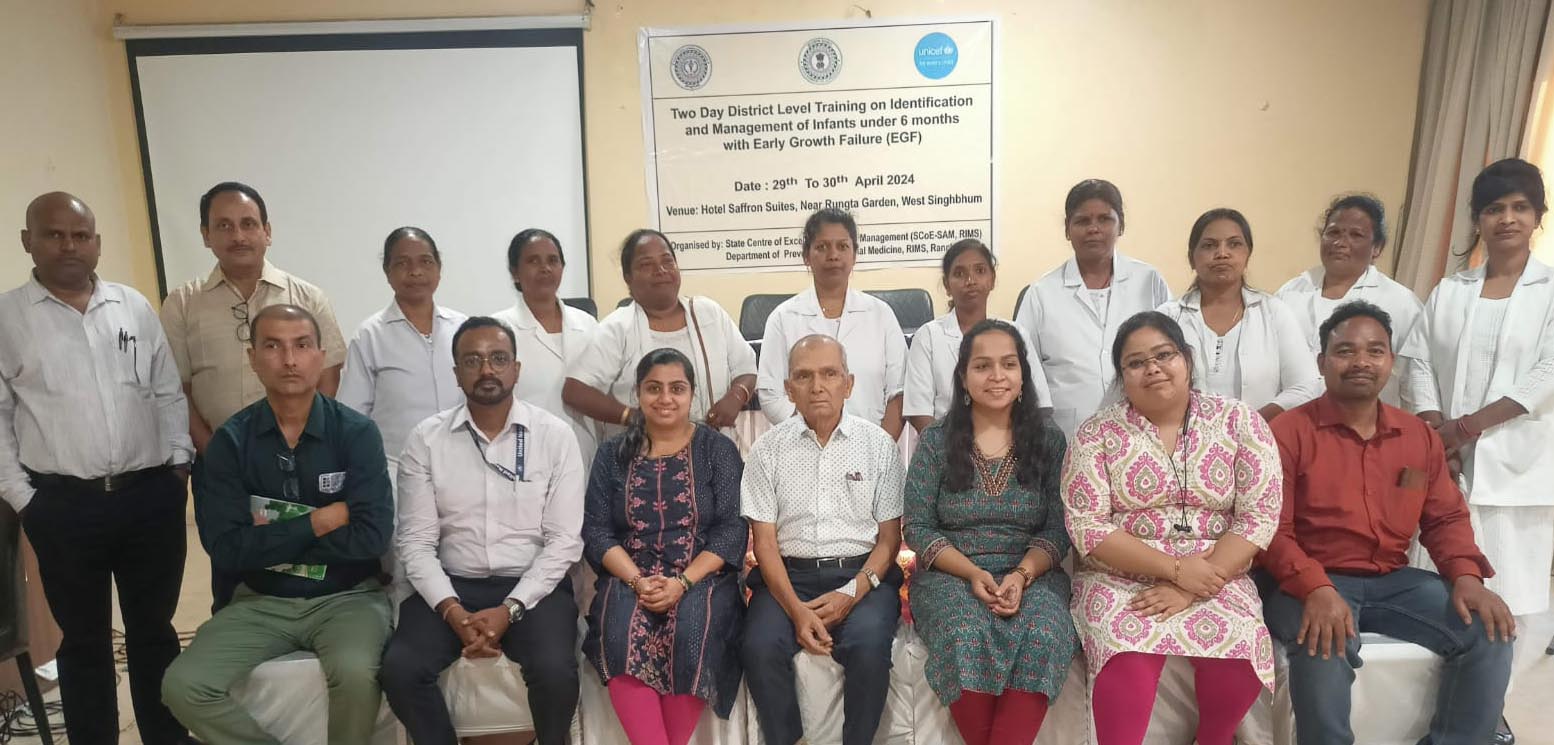
State Centre of Excellence for Public Health Nutrition not only provide technical support in capacity building but build resource persons within the system, groups of experts and also engaged with stakeholders to maintain the quality of capacity building. SCoE reaches every platform from State to household level to improve the knowledge and skills of State. We also strengthen the existing platform where capacity can be buildup of State, District, Block, Sector level officials and frontline workers. We engaged with different platforms of prevention strategies, management strategies as well to improve the quality of training. Pre-test and post-test, practical exercises, hands on training, role plays and reading technique are some of the important strategies that SCoE adopt in every training followed up with refresher trainings bi-annually not only to sensitize the participants but also to make them aware about the content and its importance during implementation.
Capacity Building
State Centre of Excellence for Public Health Nutrition not only provide technical support in capacity building but build resource persons within the system, groups of experts and also engaged with stakeholders to maintain the quality of capacity building. SCoE reaches every platform from State to household level to improve the knowledge and skills of State. We also strengthen the existing platform where capacity can be buildup of State, District, Block, Sector level officials and frontline workers. We engaged with different platforms of prevention strategies, management strategies as well to improve the quality of training. Pre-test and post-test, practical exercises, hands on training, role plays and reading technique are some of the important strategies that SCoE adopt in every training followed up with refresher trainings bi-annually not only to sensitize the participants but also to make them aware about the content and its importance during implementation.
Community based management of children with Acute Malnutrition
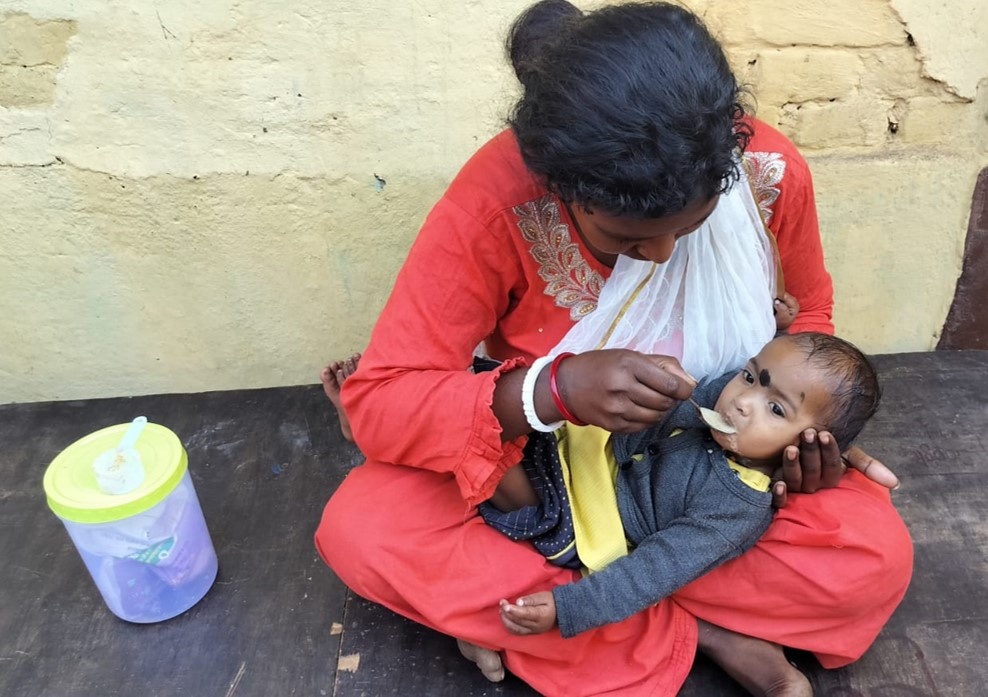
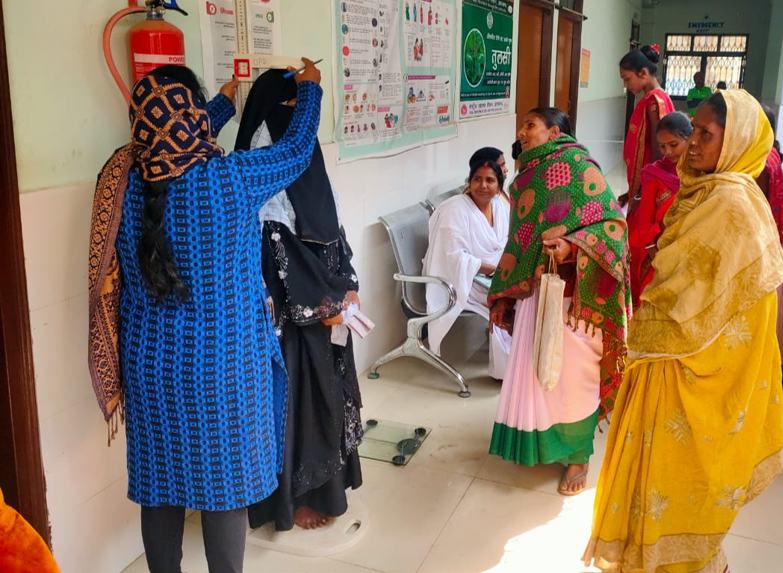
Community based management of children with Severe Acute Malnutrition and Moderate Acute Malnutrition is implementing in the State as SAAMAR Program across 24 districts of Jharkhand. SAAMAR program ensures screening of every child, registration of every identified SAM and MAM children aged between 6 m to 59 m are registered in the program followed by proper appetite and medical assessment referral of medically complicated children to facility and non-complicated children to be treated at AWCs and household level under community-based management. Every child enrolled under community management get required Take Home Ration, Augment Take Home Ration (Seraikela-Kharsawan), required essential medicines, proper counselling during 16 weeks alternate follow-up at AWCs (8 fortnightly) and joint visits of AWW and Sahiya at Household (8 fortnightly). The whole process ensures recovery of children on timely basis, referral of complicated children to facility along with linkages with community program.
Community based management of children with Acute Malnutrition
Community based management of children with Severe Acute Malnutrition and Moderate Acute Malnutrition is implementing in the State as SAAMAR Program across 24 districts of Jharkhand. SAAMAR program ensures screening of every child, registration of every identified SAM and MAM children aged between 6 m to 59 m are registered in the program followed by proper appetite and medical assessment referral of medically complicated children to facility and non-complicated children to be treated at AWCs and household level under community-based management. Every child enrolled under community management get required Take Home Ration, Augment Take Home Ration (Seraikela-Kharsawan), required essential medicines, proper counselling during 16 weeks alternate follow-up at AWCs (8 fortnightly) and joint visits of AWW and Sahiya at Household (8 fortnightly). The whole process ensures recovery of children on timely basis, referral of complicated children to facility along with linkages with community program.
Facility based management of children with severe acute Malnutrition
SCoE is also supporting NHM in strengthening facility-based management of children by linking with community as well. SCoE also established Up-Referral unit for medically complicated children with SAM at RIMS. All complicated cases of State are being referred to this tertiary care unit. SCoE has initiated Screening of children coming to OPD of Dept of Pediatrics followed by counselling and referral.
Facility based management of children with severe acute Malnutrition
SCoE is also supporting NHM in strengthening facility-based management of children by linking with community as well. SCoE also established Up-Referral unit for medically complicated children with SAM at RIMS. All complicated cases of State are being referred to this tertiary care unit. SCoE has initiated Screening of children coming to OPD of Dept of Pediatrics followed by counselling and referral.
Management of under 6-month children with early growth failure
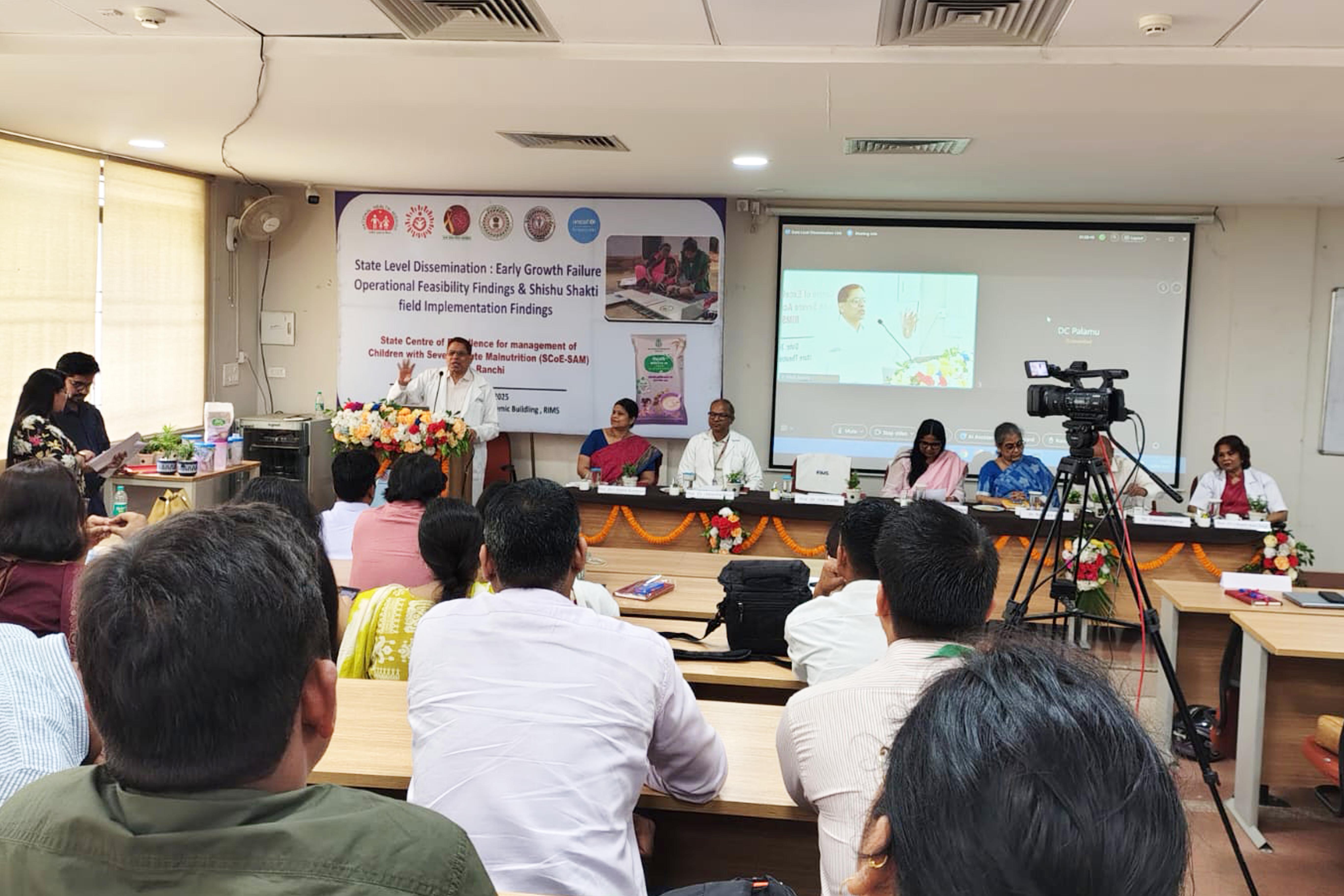
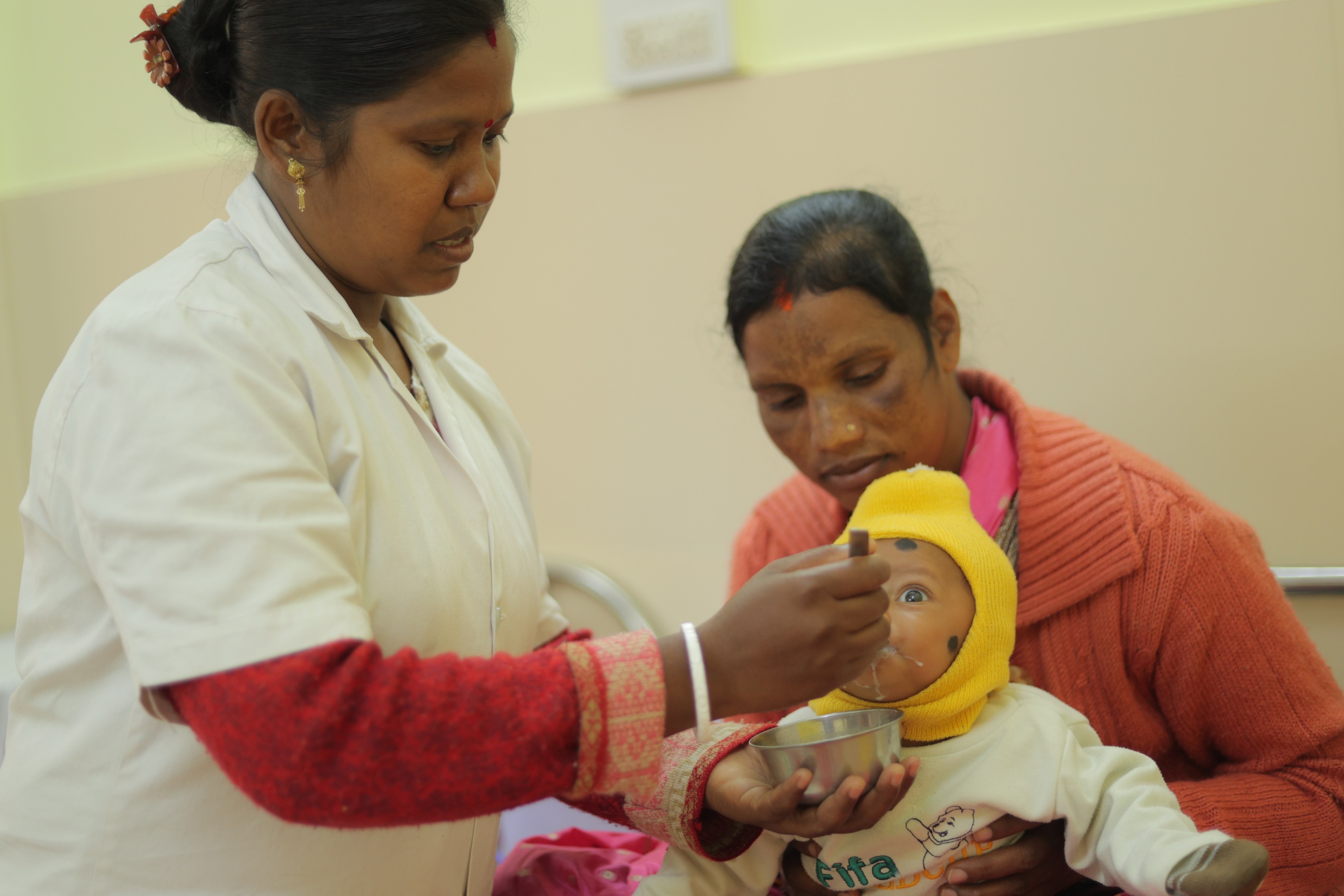
Recently we supported the initiative of management of under 6-month children suffering with early growth failure. It refers to poor weight gain, weight loss or faltering growth during the most critical window of life. This period is foundational for survival, brain development, immunity and long-term sustaining optimal nutrition. Early Growth Failure (EGF) substantially increase the risk of severe wasting, infections, developmental delay and mortality too, if not addressed and managed early. To mitigate this challenge, a feasibility study was initiated through SCoE in Sadar Chaibasa of West Singhbhum district for implementation of management of under 6-month children with Early Growth Failure. Results with positive indicators were disseminated to Government counterparts leading to replication of implementation across State. Now we are supporting implementation of EGF in focused districts as well as technical advocacy to State Nutrition Mission, NHM and WCD for effective implementation of the program. This program is now subsumed under SAAMAR 2.0 program.
Management of under 6-month children with early growth failure
Recently we supported the initiative of management of under 6-month children suffering with early growth failure. It refers to poor weight gain, weight loss or faltering growth during the most critical window of life. This period is foundational for survival, brain development, immunity and long-term sustaining optimal nutrition. Early Growth Failure (EGF) substantially increase the risk of severe wasting, infections, developmental delay and mortality too, if not addressed and managed early. To mitigate this challenge, a feasibility study was initiated through SCoE in Sadar Chaibasa of West Singhbhum district for implementation of management of under 6-month children with Early Growth Failure. Results with positive indicators were disseminated to Government counterparts leading to replication of implementation across State. Now we are supporting implementation of EGF in focused districts as well as technical advocacy to State Nutrition Mission, NHM and WCD for effective implementation of the program. This program is now subsumed under SAAMAR 2.0 program.
Shishu Shakti - An Augmented Take Home Ration
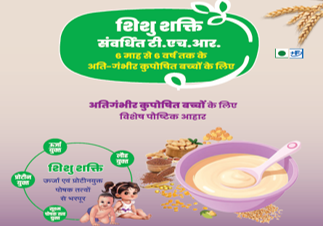
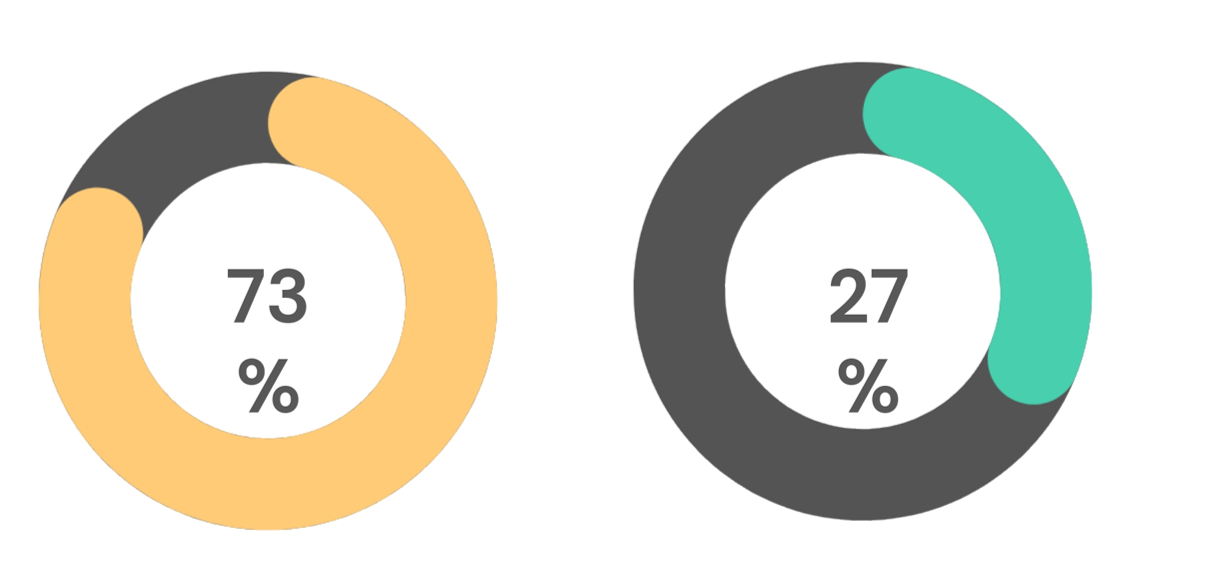
Shishu Shakti, a successful initiative taken by SCoE with support from UNICEF, Jharkhand, Dept of WCD and State Nutrition where a special recipe is formulated for children suffering from Severe acute malnutrition. This initiative was launched and implemented in Chakradharpur blokc of West Singhbhum during first phase. With the high success rate and feasibility of Shishu Shakti, results were disseminated to State Govt with 78% recovery rate amongst children with Severe acute malnutrition and 94% as sustained recovery. With the success story of Shishu Shakti in Chakradharpur, other districts have taken initiative to replicate the innovation. Seraikela-Kharsawan becomes the first district to replicate the initiative, West Singhbhum and Palamu has initiated the process of implementation. We are also regularly advocating with the State for scaling up the initiative across state.
Shishu Shakti - An Augmented Take Home Ration
Shishu Shakti, a successful initiative taken by SCoE with support from UNICEF, Jharkhand, Dept of WCD and State Nutrition where a special recipe is formulated for children suffering from Severe acute malnutrition. This initiative was launched and implemented in Chakradharpur blokc of West Singhbhum during first phase. With the high success rate and feasibility of Shishu Shakti, results were disseminated to State Govt with 78% recovery rate amongst children with Severe acute malnutrition and 94% as sustained recovery. With the success story of Shishu Shakti in Chakradharpur, other districts have taken initiative to replicate the innovation. Seraikela-Kharsawan becomes the first district to replicate the initiative, West Singhbhum and Palamu has initiated the process of implementation. We are also regularly advocating with the State for scaling up the initiative across state.
Maternal Nutrition
Maternal nutrition is one of the important aspects of prevention strategies. First 1000 days are critical for child survival, growth and development. Ensuring nutrition during pregnancy and after birth, early initiation within one hour of birth, exclusive breastfeeding upto 6 months and complementary feeding at right time with right food is the key to achieve optimal nutrition of children upto two years of age. We are linking with maternal components along with our internal Dept of Obs and Gynecology and NHM, WCD for improving maternal indicators in the State.
Maternal Nutrition
Maternal nutrition is one of the important aspects of prevention strategies. First 1000 days are critical for child survival, growth and development. Ensuring nutrition during pregnancy and after birth, early initiation within one hour of birth, exclusive breastfeeding upto 6 months and complementary feeding at right time with right food is the key to achieve optimal nutrition of children upto two years of age. We are linking with maternal components along with our internal Dept of Obs and Gynecology and NHM, WCD for improving maternal indicators in the State.
Research and Knowledge Management
This is important component of SCoE where evidence-based research for policy advocacy is conducted. It forms the backbone of effective nutrition policy, programming and practice. Complex challenges of malnutrition can be resolved through robust research and systematic generation, synthesis and use of knowledge which are essential for designing evidence-based interventions, resource allocation and sustainable nutrition outcome.
Research and Knowledge Management
This is important component of SCoE where evidence-based research for policy advocacy is conducted. It forms the backbone of effective nutrition policy, programming and practice. Complex challenges of malnutrition can be resolved through robust research and systematic generation, synthesis and use of knowledge which are essential for designing evidence-based interventions, resource allocation and sustainable nutrition outcome.
Monitoring and Supportive Supervision
Implementation process needs to be monitored time to time for ensuring that program is adhering to protocol, implemented as planned, services maintain quality standards, gaps are identified early and corrective actions are taken in a timely manner. We ensure that supportive supervision will be 360-degree approach which consist of team of National Center of Excellence, faculties from SCoE, System led supportive supervision through district and block govt officials and team of block coordinators. The aims of supportive supervision is to track progress, ensure coverage, quality and timeliness of services, identification of gaps and bottlenecks which provide evidence for decision making and course correction. The findings are disseminated with State and District review meetings along with recommendations for policy decisions.
Monitoring and Supportive Supervision
Implementation process needs to be monitored time to time for ensuring that program is adhering to protocol, implemented as planned, services maintain quality standards, gaps are identified early and corrective actions are taken in a timely manner. We ensure that supportive supervision will be 360-degree approach which consist of team of National Center of Excellence, faculties from SCoE, System led supportive supervision through district and block govt officials and team of block coordinators. The aims of supportive supervision is to track progress, ensure coverage, quality and timeliness of services, identification of gaps and bottlenecks which provide evidence for decision making and course correction. The findings are disseminated with State and District review meetings along with recommendations for policy decisions.
Data Analysis and Management
The data collected at SCoE are well managed through online links, app and MIS. We ensure quality, validation and reliability for ethical use of collected data. The data collected are properly analyzed and findings are prepared. We also converge with State Nutrition Mission and Directorate of Social Welfare for strengthening SAAMAR application and Poshan Tracker respectively. We established Monthly Score Cards to track progress of our focused districts. Supportive Supervision reports are also prepared for dissemination of findings at State, District and Block review meetings.
Data Analysis and Management
The data collected at SCoE are well managed through online links, app and MIS. We ensure quality, validation and reliability for ethical use of collected data. The data collected are properly analyzed and findings are prepared. We also converge with State Nutrition Mission and Directorate of Social Welfare for strengthening SAAMAR application and Poshan Tracker respectively. We established Monthly Score Cards to track progress of our focused districts. Supportive Supervision reports are also prepared for dissemination of findings at State, District and Block review meetings.